Washington University School of Medicine Oral Histories
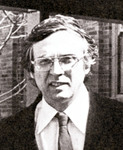
James D. Miller Oral History
Interviewer
Rosalie Uchanski, PhD
Loading...
Summary
James D. Miller was interviewed by Rosalie M. Uchanski on October 7th, 2016, for approximately 89 minutes.
Scope and Content
Miller discusses his life, his education in psychology, and career in auditory research. Miller recounts his childhood in West Alice, Wisconsin and his education at the University of Wisconsin, where he studied experimental psychology with renowned psychologist Harry Harlow, and at and Indiana University where he studied auditory psychophysics with James Eagan. Discussing his career in auditory perception and auditory learning, he highlights his pioneering use of chinchillas in auditory research and contributing to significant advancements in hearing aid technology. He reflects on the evolution of deaf education, the impact of cochlear implants, and his colleagues and research students at the Central Institute for the Deaf as well as briefly commenting on the work of sex researchers Masters and Johnson.
Biographical Information: Interviewee
James D. Miller, PhD (1930–2020) was a pioneering hearing and speech communication researcher. Raised in Wisconsin, he attended the University of Wisconsin, where he studied experimental psychology with renowned psychologist Harry Harlow who once said Miller had been his best student. In 1957 he earned his Ph.D. in experimental psychology from Indiana University. His postdoctoral research on noise-induced deafness influenced hearing protection standards. In 1959 Miller was recruited by the Central Institute for the Deaf (CID) for a two-year postdoctoral position. He would eventually work at CID for 40 years initially as head of the animal research program and later as Director of Psychological Laboratories and as Director of Research. He contributed to developing the first wearable digital hearing aid and formulated the auditory-perceptual theory of phonetic recognition. Later, he focused on speech perception training for hearing aid users. At Central Institute for the Deaf and Washington University in St. Louis, he mentored dozens of graduate students and post-doctoral fellows. In 2003 Miller retired as Research Director Emeritus of CID and as Research Professor of Otolaryngology, Adjunct Professor of Speech and Hearing Sciences, and Adjunct Professor of Psychology at Washington University. In 2003, he returned to Bloomington, Indiana where he joined Communication Disorders Technology, Inc. At CDT he conducted multi-university NIH-funded research on training hearing-aid users to recognize speech more efficiently. In 2005 he became Adjunct Professor of Speech and Hearing Sciences at Indiana University. In addition to his scientific career, Miller was an avid tennis player. He served as president of the AAA Municipal Golf and Tennis Club in Forest Park, St. Louis, where he helped to integrate that formerly all-white organization. During his studies at Indiana University, he participated in campus protests to demand equal opportunities and rights for Black students. He continued his activism into his 80’s, walking house-to-house to encourage voter registration.
Biographical Information: Interviewer
Rosalie Uchanski, PhD is Associate Professor of Otolaryngology at Washington University in St. Louis. After graduating with a BS in Bioengineering from the University of Illinois-Chicago in 1978, she received an MS and an PhD in Electrical Engineering and Computer Science from the Massachusetts Institute of Technology (MIT) in 1981 and 1988 respectively. Uchanski worked at the MIT Lincoln Laboratory and at the Boston University Department of Communication Disorders before coming to the Central Institute for the Deaf (CID) in 1993. In 2003 she joined the faculty of Washington University in St. Louis. Her research interests include: speech perception by hearing-impaired listeners, especially cochlear implant users; perception of talker-specific properties of speech by cochlear implant users; perception of suprasegmental speech characteristics and its relation to learning words; and psychoacoustic abilities of cochlear implant users and of persons with unilateral hearing loss.
Interview Date
2016-10-07
Collection Identifier
OH153
Length
Approximately 1 hour and 29 minutes.
Restrictions
Users wishing to publish (in whole, or in part) content taken from the audio or transcript of this oral history interview must request, sign, and return a Statement of Use form to the Becker Archives. For detailed information regarding publication and use of this oral history, contact the Becker Archives ([email protected]).
Recommended Citation
James D. Miller Oral History, OH153, Bernard Becker Medical Library Archives, Washington University in St. Louis.
Disclaimer
The Becker Archives provides access to this oral history interview as a record of the past. This interview reflects the attitudes, perspectives, and beliefs of the interview participants, which may reflect outdated, biased, and offensive views and opinions. The Becker Archives does not endorse the views expressed in this interview, which may contain materials offensive to some users.